
A remarkable discovery off the coast of Tahiti in 2022 revealed one of the world’s largest healthy coral reefs stretching nearly three kilometers across the seafloor. The finding reminded us of something important: despite covering more than 70% of the planet, we still know surprisingly little about the ocean.
Yet while discoveries like this capture headlines, the larger story remains largely invisible.
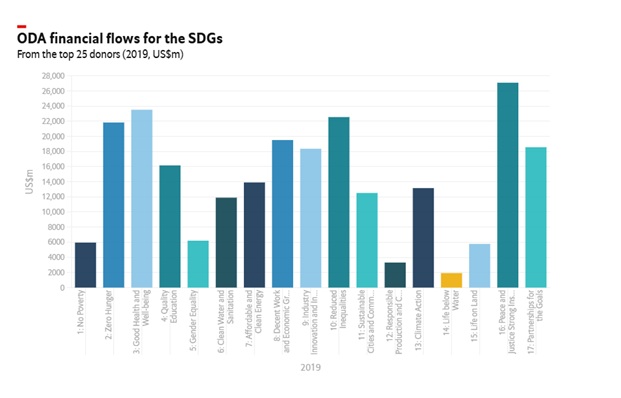
The ocean is dramatically underfunded.
According to figures highlighted by the Rt Hon Patricia Scotland KC, Secretary-General of the Commonwealth, Sustainable Development Goal 14 (Life Below Water) has received just 0.01% of development finance directed toward the UN Sustainable Development Goals. Philanthropic funding for ocean initiatives has also historically lagged behind other environmental priorities.
This funding gap exists despite the fact that ocean economies generate an estimated $3-6 trillion annually and support roughly 350 million jobs worldwide.
The disconnect is hard to ignore.
Healthy oceans underpin global food systems, maritime trade, coastal protection, tourism, climate regulation, and carbon storage. Yet ocean conservation, research, monitoring, and restoration continue to compete for a fraction of the capital flowing into other sectors.
The challenge is not a lack of opportunity.
Governments, investors, and development institutions increasingly recognize the potential of blue bonds, blended finance structures, public-private partnerships, and ocean-focused climate funds. Philanthropic investment in marine conservation has grown substantially over the past decade, and new initiatives are emerging to help countries access ocean and climate finance. One example is the Commonwealth’s online database, which helps member countries identify and access funding opportunities for ocean-related projects.
The challenge is scale.
If the ocean is one of humanity’s most valuable assets, our investment levels should reflect that reality.
The future of the blue economy will not be determined by how many reports we publish or how many commitments we announce. It will be determined by whether capital reaches the projects, communities, scientists, and innovators working to protect and sustainably manage ocean resources.
The ocean funding crisis is often framed as an environmental issue.
In reality, it is a capital allocation issue.
And until investment catches up with the ocean’s economic and ecological value, the gap between what we know needs to be done and what actually gets funded will continue to grow.