
I didn’t learn about the ocean protection funding gap from a report. I learned about it from empty water.
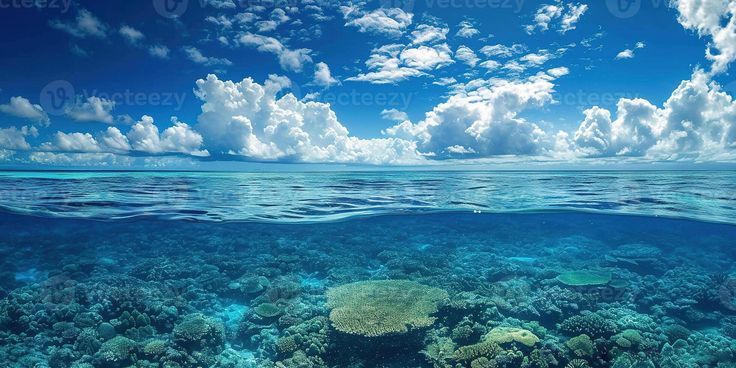
The first time I slipped beneath the surface as a teenager, I met a reef that was very much alive. Key Largo, sixteen, rental gear that didn’t quite fit, a brain on fire from new colors. I didn’t yet have the language to comprehend ecosystem services or coastal resilience. I just knew there was a whole city under there.
Years later, in Mexico, I swam over a different city, this one in ruins.
The guide sold it as a reef tour. The water sold it as something else. Bone‑white coral, algae coating everything, a lone stingray gliding through what felt less like an ecosystem and more like a graveyard. I heard other tourists say how pretty it was. I had to get out of the water.
That was the first time I understood that protection on paper and protection in practice aren’t the same thing.
Over the last six weeks, I have been following the money behind that feeling.
The Ocean Protection Gap coalition (Systemiq, Campaign for Nature, Together for the Ocean) estimates that about $1.2B currently flows to ocean protection. To actually meet the 30×30 target, we would need around $15.8B per year. That leaves a $14.6B annual shortfall.
Those numbers are tidy. The reality they describe isn’t.
In a lot of places, a marine protected area looks like this:
- One ranger covering hundreds of kilometers, sharing an ageing boat.
- Monitoring plans that exist only as long as a project grant does.
- Community managers who are consulted in proposals and are mostly invisible in budgets.
On the United Nations map, those zones count toward 30×30. On the water, they’re one broken engine away from disappearing.
Week 1: The gap is a structure, not a vibe
Once you look at the numbers, the gap stops being mysterious.
The coalition’s report keeps it simple: $1.2B in current annual protection vs. $15.8B needed, $14.6B short. Yet by 2050, closing that gap could generate around $85B per year, benefiting stronger fisheries, better coastal protection, and healthier ecosystems.
The question is, are we undervaluing a system that literally pays us back?
So why are we leaving money on the table?
Because the previous financial architecture we built for ocean rewards are things we can see, count, and securitize easily: ports, ships, tourism infrastructure. It doesn’t yet know what to do with long‑term management, enforcement, and locally led stewardship.
You can feel that misalignment every time a new MPA is launched with a press event and no operational budget behind it.
Week 2: When everything is blue, nothing is
Layer one problem on top of another: the labels we use to describe ocean finance, and you still need to squint your eyes to see them.
In the last decade, the term “blue” has become a popular adjective, akin to Mark Zuckerberg’s metaverse. Blue bonds, blue funds, blue this and that. Some of these are serious attempts to align capital with ocean health. Some are just debt or equity with a pretty wave icon.
The UNEP FI’s Sustainable Blue Economy Finance Principles were designed to fix that. They spell out what responsible ocean finance should avoid and what it should actively support. IFC’s Blue Finance Guidelines 2.0 go further, offering sector‑specific criteria for shipping, aquaculture, plastics, conservation, and more.
These tools are the trail signs, and that momentum is building.
The problem is that they’re still mostly voluntary, while the market happily applies blue to everything from sustainable fisheries to business‑as‑usual coastal real estate. For frontline communities and serious project developers, this has two consequences:
- It dilutes trust. A careful MPA or community‑led fishery improvement project gets lumped in with generic port expansions that happen to have a mitigation line item.
- It raises transaction costs. Every investor, donor, and NGO has to do their own taxonomy work to tell signal from noise.
If you have ever read a blue use‑of‑proceeds paragraph and realized it could apply to almost anything, you have felt this problem.
Week 3: Too risky is often code for “This doesn’t work for us.”
There is a line I hear frequently when I look at coastal resilience or conservation concepts: this is too risky.
Environmental Defense Fund and others have spent time unpacking that verdict. Their conclusion: many ocean projects get labeled too risky, not because their fundamentals are worse than land‑based projects, but because the tools for de‑risking them are underdeveloped.
Sound familiar? These are market gaps:
- Data gaps. It’s still easier to model the performance of a toll road than the protective value of a mangrove belt.
- Instrument gaps. Guarantees, first‑loss capital, and tailored insurance exist on powerpoints more than in term sheets to make an active difference for funders to care.
- Scale gaps. A lot of effective projects are too small for large investors and too complex for small grants.
From the other side of the table, the story sounds like this: “We built the project to protect the coast; we didn’t know we also had to invent the financial instrument to pay for it as well.”
Blended finance and guarantees are meant to sit in that space, absorbing early‑stage risk so that commercial capital can join. But until those become routine, a huge amount of potential stays stuck in what looks like a permanent pilot phase.
Week 4: Nature as an insured asset, not a backdrop
If protection funding is the question of “how much”, then insurance is the question of what counts.
If a sea wall fails during a storm, insurance is the one that pays. However, on the opposite end of the spectrum, if a reef breaks that same storm’s energy before it reaches the wall, there is no line item for that.
Ocean Risk and Resilience Action Alliance‘s work on reef‑positive parametric insurance suggests a different logic. In Mexico’s Quintana Roo and across the Mesoamerican Reef, parametric policies now tie storm triggers to rapid payouts for reef restoration.
You can read those case studies as niche innovation. Or you can read them as a quiet proof point that:
- If we measure reef protection, we can insure it.
- If we insure it, we can justify investing in keeping it healthy.
Nature is still mostly priced as scenery. These pilots show how it can be priced as infrastructure.
From a funding‑gap perspective, that matters. Once reefs and mangroves enter risk models as protective assets, it gets harder to justify starving them of operational support.
Week 5: No bankable deals is an architecture problem
On one side of the conversation, we hear that “there is a mountain of capital looking to make an impact.” On the other hand, there are no bankable deals in the ocean space.
Both groups are describing the same missing middle.
Research from the Environmental Defense Fund, the University of Wollongong, and OECD – OCDE all point to the same pattern: there is no shortage of ideas or scientific evidence, but there is a shortage of project preparation and enabling conditions.
What is missing is boring and specific:
- Paid time to translate science into a real business or revenue model.
- Standardized financial templates, so a kelp farm or MPA co‑management plan doesn’t start from zero every time.
- Support for legal, permitting, and stakeholder processes before investors ever see the deal.
Without these, science sits in reports, communities sit in consultations, and investors sit in panels talking about potential.
Saying there are no bankable deals is a way for people to complain that we haven’t built the architecture to make these deals possible.
The money is out there, we’re just not worthy of it yet.
Week 6: Who can even get to the money?
The last piece is the most uncomfortable.
Even when funds exist, standards improve, de‑risking tools expand, and pilots prove out, a basic question remains: who is actually allowed to touch the money?
RISE UP for the Ocean‘s work on coastal communities, UNDP‘s work with Small Island Developing States (SIDS), and WRI Climate‘s analysis of Indigenous and local community finance all give us a wide-view snapshot to get a better picture.
We are underfunding the people closest to the water.
- SIDS sit on the frontlines of climate and ocean change, yet their formal income status and debt burdens often block them from concessional finance designed for less risky contexts.
- Indigenous peoples and local communities manage a significant share of global biodiversity, but receive a tiny fraction of climate and conservation finance directly.
- Small coastal NGOs and municipalities are routinely excluded by minimum ticket sizes, accreditation requirements, and admin loads that assume a large institution with a grants team.
This isn’t a tragedy of intent. It’s a series of designated choices.
If applications are only in English, only organizations with fluent staff can apply. If the minimum project size is several million, community‑scale work will never qualify.
We built the system this way. Which means we can also rebuild it.
Where this leaves me
Swimming over that dead reef years ago, I felt like I was looking at the aftermath of a thousand decisions no one had properly linked together.
Tourism marketing that treated reefs as scenery. Energy and agriculture policies that treated the sea as a sink. Financial systems that treated protection as a cost center instead of a core service.
It’s tempting to respond to that with despair or with vague calls for more funding.
The last six weeks have convinced me that more is not the most honest word. The gap is large, but it isn’t unimaginable. $14.6B annually is small next to the trillions we move through global markets. The harder task is not raising the number. It’s changing the rules that decide where that number lands and what it’s allowed to do.
That means:
- Prioritizing operational finance (enforcement, monitoring, maintenance) alongside capital projects.
- Anchoring blue products to serious standards, not just adjectives.
- Using public and philanthropic money deliberately to de‑risk what the market currently misprices.
- Funding project preparation as a real stage, not an afterthought.
- Redesigning access so SIDS, Indigenous groups, and small coastal orgs can lead, not just be consulted.
None of that is as dramatic as a new global pledge. All of it’s more likely to keep rangers on the water and reefs alive in the places that shaped many of us.
The ocean protection funding gap isn’t just a story about missing money. It’s a story about who we have chosen to trust.
If you work anywhere in this system: science, policy, finance, advocacy, keep this practical starting question in the back of your mind:
In your institution, what is one rule or habit that is quietly keeping money away from the people and ecosystems you want to protect?
Further reading:
UNEP Finance Initiative – The Sustainable Blue Economy Finance Principles https://www.unepfi.org/wordpress/wp-content/uploads/2020/06/Sustainable-Blue-Economy-Signatory-Declaration.pdf
Guidelines for Blue Finance 2.0 – IFC https://www.ifc.org/content/dam/ifc/doc/2025/guidance-for-blue-finance-v2-0.pdf
Ocean Protection Gap Report – Systemiq, Campaign for Nature, Together for the Ocean https://www.campaignfornature.org/ocean-gap-report-2025